Showing posts with label cornell. Show all posts

Sunday, April 17, 2011

The Byzantine Bathhouse of Joseph Cornell

My project for this summer is to transform my entire house into a single, living, inhabitable work of art. Some of you know about the Night Garden, the miniature & mystical greenhouse-cathedral I have been slowly building in my livingroom; a while back it was decided (I hesitate to say that I decided; it felt more like I was the channel for a choice not entirely my own...) that in order to make one room a working, mythic whole the entire house would have to be cultivated in the same spirit. I've been working on the endless task of covering the cardboard bones of The Night Garden with papier mache, trying to get that space finished before moving on to the rest of the house -- but I've been going a little crazy, because it's so daunting to conjure this palatial construction out of the vague resonances of my heart into reality in the first place, and much more so when it takes hours of work with a bucket of wallpaper paste just to make it sturdy enough to start painting. Which it isn't yet, because I'm tired of papier mache! I want to do something fun! (As to why I'm papier macheing with a bucket of wallpaper paste, everything I know about how to make massive magical things for cheap was discovered by stumbling upon Kim Graham's Tree Troll project. She suggested it over that horrible flour-and-water pap.)

So I sat down and thought about a quick and satisfying shift I could make in the house, something I could see. And I thought -- hell, what about the bathroom? It's tiny, after all (barely four feet square, not counting the tub) and surely easily altered into some kind of aesthetic creation. So I went and sat in there with my notebook to think through it. Just perched on the potty and thought, first of all, about paint colors. I'd been vaguely contemplating a nice green, a big pot of ferns, you know, fresh and leafy, whatever. But as I stared at the walls it seemed more and more as if every color I brushed on them with my mind was as cheerfully bland as the next, and no scheme that came to mind could do anything to shift the room from mildly pleasant functionality to art.

Now, I've seen pictures of fabulous bathrooms with hammered gold (!) walls and giant painting, bathrooms in black velvet, graffiti showcases, sleek expanses of marble. But in my opinion there is a vast difference between a well-designed (or just a designed) bathroom and a bathroom that feels like a truly beautiful space in the way that other rooms and spaces often do, and as I sat there it occurred to me that I wasn't sure if I'd ever really seen a bathroom that was more than just decorated, that felt like someone had really put thought into how they wanted the space to shape them.

I think this is because bathrooms are the places where we are closest to our body and its functions: this is the room where we shower and poop and floss, after all, and we Westerners tend to view all rituals of cleansing as distasteful.  If we are not rich, we make our bathrooms pleasantly antiseptic and aesthetically hygienic -- think of all the neutral tones, cool colors, smooth surfaces, the utterly bland spaces, as vague as possible, gently whitewashing all the earthy, sensuous, gritty contact with our dirty (literally and figuratively) naked bodies! And if we are wealthy, we order them made so ostentatiously luxurious as to completely obscure, once again, the actual body itself, this time drowned out by teak and black granite or the aforementioned hammered gold, so immersed in the thick carpet and jacuzzi tub that the realities of dirt, the small, human, hard-working body once again are vanished.


Main bath, Bath, twilight
So I thought about the act of cleansing, and the places and the cultures that placed importance on the ritual and the ceremony of the bath. Like the Turkish hammam, for example -- listen, that's a place where the body just gets to be the body, steamed, dunked, and sweated out next to other bodies without shame or distaste or overwrought anxiety about spotless surfaces. The Romans built stunning bathhouses -- I've been to the baths in Bath, and it's strange to think that nothing like that kind of elegance and attentiveness to the needs of the body could really ever have been constructed in this country except by those emigrating from other places where the rituals of purification are still holy. We just don't do that here.


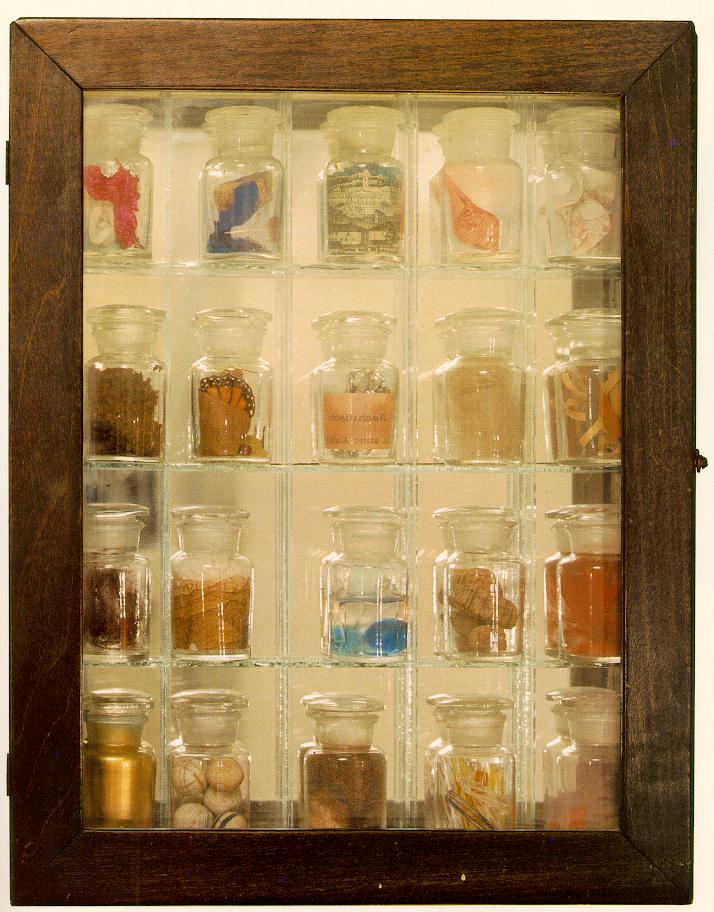
And I thought, too, about alchemy and its rituals of purification -- the old lead-into-gold adage you may be familiar with from silly stories is only a surface metaphor; the Great Work required purifying the self along with your materials, and comfort with the stages of corruption before you got to get along to the gold. And I thought about the tiny little room I was sitting in with its unseeing cream walls, and an image came to me: a hamsa, a charm you have probably seen, called variously a Hand of Fatima and a Hand of Miriam, an common and lovely amulet with a variety of meanings, my favorite being that (according to Wikipedia, and why not?) that  "many Jews believe that the five fingers of the hamsa hand remind its wearer to use their five senses to praise God." (What the hell else do I do?) Except that I saw not a tiny amulet (and here are three beautiful amulets to look at, while I'm on the subject, and also one that serves as proof that anything, no matter how mystical, from bath house to sacred charm, can be made kitsch if that's what you really long for!) but rather a cabinet: maybe a foot and a half tall, made of antiqued copper, in the shape of the hand. In it, dozens of tiny glass bottles, like Cornell's pharmacy cabinet. Each one full of dung, or sweat, or dance. And strung on the wall opposite, chains of them, actually hand-sized this time, each one a frame for a poem, a picture, a painting of the body in one of its merry stages of dirtmaking and refreshment. And the walls themselves? Turquoise and terracotta, earth and water colors, rich and dark. A room in which to enjoy the magical transition from filthy to freshly cleansed is what I want, not an antiseptic box of tile echoing the lost shape of a space once richly laid with artful anticipation of a plunge into a hot or icy pool. A room that has not forgotten how to embrace the body, where there will be no evil eye to glare at your supposed imperfections, where the cycles of matter through growth and decay, cleanliness and filth, are treated properly with humor and reverence...

Sunday, January 16, 2011

The Museum of Joy: an etymology

One day I will build a museum that is the delighted child of every collection of the marvelous, a gracious bow to the old cabinets of curiosity in how they strove to show the great harmony of being, a grand new dance of entrancingexhibition...but in the meantime, a selection of some other magical locations in which the dust of fascination sinks slowly through the dark:

The Main Street Museum, White River Junction, VT

The closest I have ever been to this fantastic idea is its website, but my friend Sarah assures me it is as bizarre and wonderful as it appears: full of peculiar taxidermies and objects in assorted wonderous categories such as "Carbon; Color as a Hysterical Reaction; Cute Things; Flocking; Objects Chewed by Pets; Teeth, More Teeth, Things with Nail-holes; 'Things Made from Animals or Parts of Animals,'" etc... (from their Wiki)


The Museum Of Jurassic Technology, Los Angeles, CA

Now, I have been here, and it was one of the two times in my waking life I have ever felt like I was entering into the space of my dreams. The exhibits range from Napoleon-inspired collages to alchemical clock experiments to superstition boxes; on the left, please examine a lovely mosaic made entirely from butterfly scales arranged with a boar's hair, viewable only under microscope. The place itself seems at first glance to be a small and shabby warehouse, but like all good dream places it is far larger on the inside, and the dark halls carry the uncanny sense that you had better look at everything, because even if you are lucky enough to find yourself in the same room a second time there is no guarantee that it will be the same...


The Museum of Love, now accessible only via the gardens of nostalgia and the internet

My father built this for his 40th birthday. It probably explains a lot about me. If pictures survive, I'm still too young to see them. This will be true at least until my deathbed. This most excellent image, however, called The Museum of Love and Mystery, by the equally excellent Jim Woodring, will suffice to show the spirit of the party. (In fact, if the "Dutch Uncle of Dreamland" wasn't there, it was just because the merry-go-round had other plans for him that night.)

This is probably the time to explain that my father taught me most everything I know about how to love the truly weird and beautiful. He also has a wonderful recipe for absinthe, a copy of which I was promised upon my 21st birthday, but the 2nd anniversary of that grand holiday is fast approaching and so far no dice. (It is, of course, a closely guarded secret.) A semi-thwarted alchemist, my dad had to content himself with growing wormwood in a hidden El Cerrito backyard and consulting books on alembics for proper distallation techniques. I did my bit by testing for methanol content, i.e. drinking a lot.

The Museum at Purgatory, a book by Nick Bantock

This is not the Museum at Purgatory, but rather a 15th century
illumination: 'Souls Released From Purgatory' from the 
'Hours of Catherine of Cleves' at the Morgan Library &
Museum, borrowed from the Wall Street Journal's website.  

I was not highly taken by Griffin and Sabine, although as a lover of artist books, arcane letters, collage, inventiveness and the macabre I have been told that my feelings on the matter are nonsensical and I'm just jealous I didn't think of it. This is not true in the least; I'm jealous I didn't think of The Museum at Purgatory, which is not only a cabinet of curiosity in the form of a book but also takes place in an ever-shifting city that I thought I had invented, at the age of sixteen, in a short story called The Man in the Orange Silk Shirt. Apparently there are multiple gateways to that marvelous and melancholy metropolis, as it seems evident that Bantock's Purgatory is the same bloody place as my unnamed citadel...(I will find the story somewhere and present quotes from the two texts side by side, but it will have to wait until after my laptop's quite done self-destructing and I can find my files again.) Anyway, this book gave me shivers of delight: instead of letters, it displays wonderful invented artifacts, from an imaginary geneology of spinning tops to a set of archaic altar boxes. It takes to the luscious extreme the longing inherent in books written on collections, from the section on The Collector in Walter Benjamin's The Arcades Project to the cabinets in Bruce Chatwin's Utz: the reader's desire to see the magnificent object in all its strange and holy order.

The WebMuseum: Joseph Cornell

Here you may see collected images of the work of Joseph Cornell. Their physical forms are all over the place; there is no Cornell museum, although Robert Coover's The Grand Hotels (of Joseph Cornell) and Charles Simic's Dime Store Alchemy: The Art of Joseph Cornell are essentially hybrid museums in themselves, prose poems displaying Cornell's essence as surely as the bottles in the Pharmacy (left) display their mystic contents, the books themselves like the careful, crafted cabinets...

There are those you don't discover until you find that you have been following their spirit's leavings for the last two hazy decades. I did not know Cornell existed until I was already making things he might have loved. But without his starry influence, silent and spidery, would it has passed into my blood, this love for old encyclopedias, small krakens, tiny bottles, amulets and charms...?